Small boats have a way of bringing sailing back to its purest form. Every gust, ripple and shift in weight becomes part of the experience. On a dinghy or daysailer, you do not just ride the wind, you learn to read it, feel it and chase it.
There’s no better way to learn to sail than on a dinghy or daysailer. In one of my earlier Marsh & Bayou pieces, I mentioned that I still had a dinghy sitting in the barn, waiting for those brisk north winds that sweep the coast. After that article, I decided it was time to pull her out and refurbish her so my wife and I could do some proper summer sailing in preparation for those brisk fall northerlies.
The moment I started working on the boat, I remembered why I loved these daysailers so much: the pure, physical engagement of it. Sailing is my favorite form of exercise. There is even an app for that. On a daysailer, your whole body works. Your abdomen and core are engaged while you hike out over the rail, countering the pressure on the sails. Your arms and shoulders never really rest because the sheet on a small boat is rarely locked off. You are constantly trimming, and you do not want to get caught in a gust with your line jammed in a cleat.
Your legs dig under the hiking straps to keep you planted, while your back and every muscle that contributes to balance are firing continuously as the boat moves beneath you. On the Sunfish, when the summer sea breeze builds to twelve knots or better, which it often does around here, you get a real cardio workout as well. It is full body, responsive exercise, and it never feels like work because you are sailing.
We had so much fun on the Tanzer 16 together that I realized I also needed something I could set up and sail more independently, strictly for “exercise,” of course. My wife found a 1970s Sunfish for a couple hundred dollars that needed some attention. The Sunfish carries a little extra meaning for me because it is the same model and roughly the same vintage as one of the first sailboats I owned as a young teenager.
The great thing about the Sunfish is the sheer number of them that exist. First introduced in 1952, more than 300,000 have been built over more than seventy years of continuous production.
That volume means parts are relatively cheap and easy to find. Picking up a serviceable sail for around $200 is a bargain compared with the thousands a cruising monohull owner can spend on a single new headsail.
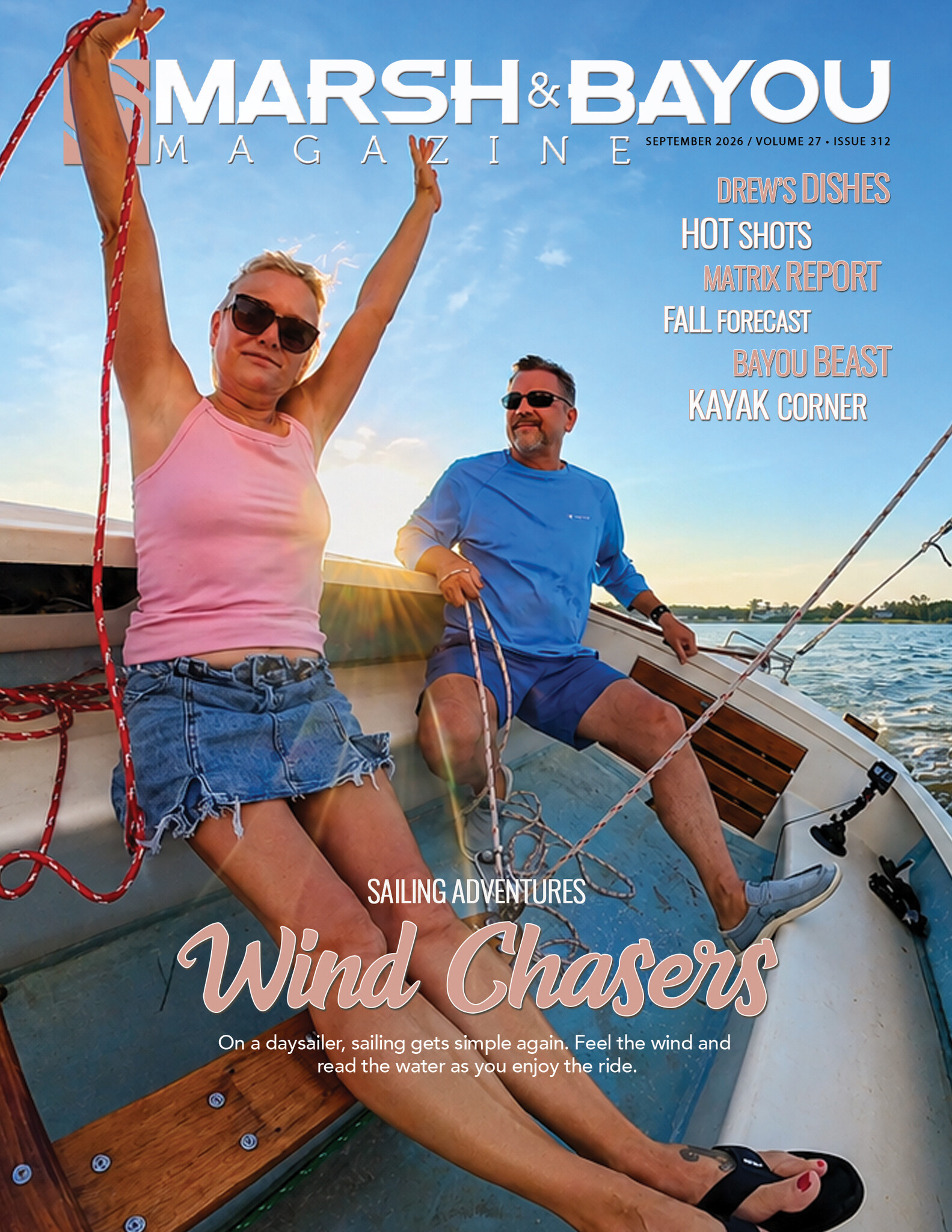
I refurbished the little boat and have been having a blast sailing by myself. Out on the water together, we have a combined age of 99 years, and the Sunfish still makes me feel like a kid again.
Reading the Water
On a keelboat, you can get lazy about watching the surface of the water. On a daysailer, you do not have that luxury. The ripples become your instruments.
A dark, ruffled patch racing toward you is a gust. A glassy streak is a lull. The way the small waves lean can tell you the true wind direction better than any flag or vane. You start to see lifts and headers forming twenty yards upwind. You feel the boat lighten as a lift builds and prepare for the sudden increase in heeling force. You see the water go flat, ease the sheet and hike less, knowing the pressure is about to drop. That constant observation of the water and the wind is sailing in its purest form. It is also one of the fastest ways to develop the “weather eye” every sailor eventually needs.
Weight Is Everything
Dinghies and most small daysailers have no heavy keel to keep them upright. Your body is the ballast. Move aft in a puff, and the bow rises, the boat accelerates and the chance of a sudden broach drops. Sit too far forward in a lull, and the boat stalls and becomes vulnerable. Hiking hard when the wind gets heavy keeps the rail just clear of the water and the boat driving forward. Come inboard a beat too late, and you are swimming.
Every sail is a continuous lesson in balance. The boat teaches you, sometimes gently and sometimes by dumping you in the drink. The lesson is simple: weight distribution is not optional. It is the difference between sailing and swimming.
No Motor, No Problem
With no outboard to bail you out, the forecast and the sky become serious business. You study the wind before you launch. You watch the clouds. You always leave yourself an exit strategy. Then comes the real test: sailing back onto a public dock. You approach on a reach, timing the final turn into the wind so the boat stalls and drifts the last few feet into the exact spot you want. You have to judge the set of the current, the angle of the wind, the traffic from other boats and the exact moment to sheet in or ease. Miss it, and you are either pinned against the dock or drifting into the path of another boat. Nail it, and you feel like a genius, at least for about thirty seconds.
That skill alone is worth every wet day and every capsize. Once you can confidently sail onto a dock in a crosswind, you can truly say, “No motor, no problem.”
Getting There Without a Trailer
One of the quiet joys of a small boat is how easy it can be to transport. I use a custom hitch that slides into the receiver on the back of my pickup. The boat is pulled forward into the bed until the stern rests on a rubber roller mounted to the receiver. A couple of green ratchet straps keep everything tight. There are no trailer lights, extra axles, maintenance headaches or storage worries.
The hitch itself is simple, heavy and well made, welded by the folks at Metal Smiths. It turns a Sunfish or small daysailer into something you can load up and go with in ten minutes. For anyone who sails the Mississippi coast or Louisiana lakes, that kind of simplicity matters. You can chase the wind without the logistical circus we all know too well.
The Real Classroom
Keelboats teach you systems, navigation, seamanship and the long game of passagemaking. A daysailer teaches you to see the wind instead of simply feeling it once it is too late.
These little boats teach you to read the water, feel the boat, move your body as part of the rig and solve every problem with sail, weight and timing. They teach you humility when you go overboard and confidence when you stick the landing at the dock.
The Tanzer 16 and this 1970s Sunfish have reminded me why small sailboats have always been some of my most generous teachers. After all these years, I’m still learning.


Comments
Be the first to comment...